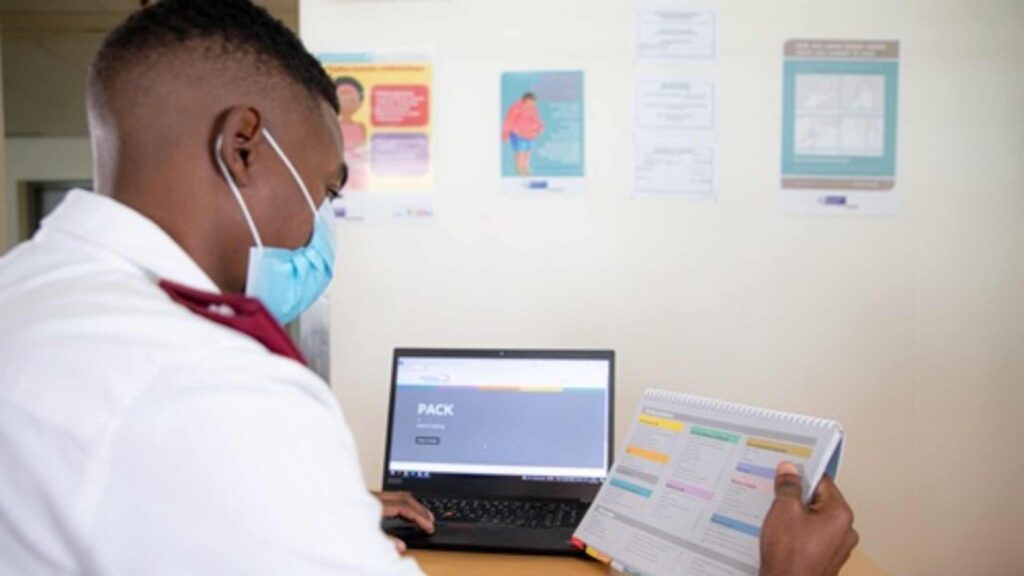
Bridging the gap between medical evidence and frontline healthcare

How can we ensure that new evidence translates into healthcare policy updates and patient care?

This is one of the key aims that the Knowledge Translation Foundation (KTF) looks to resolve.

As healthcare systems confront rising disease burdens, workforce shortages, and rapidly evolving clinical evidence, this question is arguably more relevant than ever.

While medical research output has accelerated dramatically over the past two decades, implementation inside real-world healthcare systems often lags far behind.

For frontline healthcare workers managing large patient volumes under significant resource constraints, keeping pace with fragmented guidelines, circulars, and treatment updates has become increasingly difficult.

It is in this context that the PACK (Practical Approach to Care Kit) programme has emerged as a significant model for bridging the gap between evidence generation, policy development, and clinical implementation.

Originally developed in South Africa and now adapted across multiple countries globally, PACK was designed not only as a clinical guideline, but as a continuously updating system for translating evolving evidence into practical frontline care.

The core problem for health systems

According to Lara Fairall, Scientific Director of the Knowledge Translation Foundation (KTF), the core problem facing many health systems today is no longer the absence of evidence, but the growing complexity of applying it consistently at scale.

“Guidelines which were once built to actually change practice and support people to implement knowledge are now in themselves becoming a barrier to care,” she explained during a recent engagement with international health officials visiting the KTF.

The challenge is partly one of volume.
Using updated evidence to bridge the gap in healthcare policy and patient care

“When I started working in this field, there were about 600,000 life sciences publications a year,” said Fairall.

“Now it’s somewhere between two-and-a-half and three million annually, and it’s growing even faster. It’s mushroomed, and it’s become really difficult to find the evidence that you must now implement in practice.”

For clinicians working in overstretched public health systems, that pace of change creates operational strain that conventional policy mechanisms often struggle to absorb.

Healthcare workers may be expected to navigate multiple standalone disease guidelines alongside regular policy circulars, programme updates, and interim treatment directives. This is all while delivering care in high-pressure environments.

“If you are a healthcare worker, you’re receiving national guidelines and all these circulars,” Fairall noted. “Most people simply won’t read them.”

This issue is particularly felt in primary healthcare settings, where clinicians are required to manage patients with multiple overlapping conditions during short consultations.

Fairall described how her own experience working in frontline primary care revealed a major disconnect between medical training, evidence, and the realities of healthcare delivery. “I saw huge gaps between what I had just been taught and what was being practiced,” she said.

“You had to understand how to keep professionals updated while they were seeing hundreds of patients.”

Developing PACK

Those experiences helped shape the development of PACK, which integrates evidence-based guidance across conditions into a single decision-support framework designed for everyday clinical use.

Rather than relying on fragmented disease-specific manuals, the programme consolidates guidance for HIV, tuberculosis, non-communicable diseases, mental health, maternal health, and other conditions into integrated clinical pathways.

Importantly, the programme is updated continuously through structured revision cycles that align evolving evidence with frontline implementation.

That process reflects a broader shift taking place globally within implementation science and health systems strengthening.

Policymakers and researchers are increasingly recognising that producing evidence alone is insufficient if health systems lack the operational infrastructure to absorb and implement it effectively.

Fairall argues that implementation itself must be treated as a core part of healthcare system design. “It’s not enough to scale something and then think you are done,” she said. “You’ve got to think about designing for both scaling and sustaining.”

Simultaneous pressures

That challenge is especially relevant in low- and middle-income countries (LMICs), where health systems must often respond simultaneously to infectious disease pressures, rising rates of non-communicable disease, workforce shortages, and rapidly changing treatment protocols.

South Africa, for example, continues to manage one of the world’s largest HIV treatment programmes while also confronting growing multimorbidity across its population.

“We have about 7.8 million people living with HIV and one of the largest antiretroviral programmes globally,” Fairall explained.

At the same time, non-communicable diseases are rising rapidly and patients increasingly present with multiple overlapping conditions.

Traditional healthcare models can struggle to manage that complexity efficiently.

PACK’s integrated approach addresses this by supporting clinicians through unified guidance systems that bring together evidence, policy, and practical implementation into a single operational framework.

The programme has also evolved beyond adult care into child and adolescent healthcare, reflecting growing recognition of the importance of life-course approaches to health policy.

“We realised there were major gaps in adolescent care,” said Fairall.

Fairall said the move into adolescent healthcare exposed major gaps in how health systems manage young people, particularly around mental health, chronic illness transitions, sexual and reproductive healthcare, consent policies, and long-term treatment continuity.

And that integration extends beyond evidence alone.

Indeed, effective knowledge translation requires alignment between clinical evidence, health policy, legislation, digital infrastructure, and implementation training.

Have you read: Policy to Practice: Ethiopia Explores Knowledge Translation in Cape Town

Knowledge translation and digital innovation

The KTF’s model combines guideline development with digital innovation, implementation support, and training infrastructure to help healthcare workers stay up to date as evidence evolves.

One area of growing focus is the move toward digital systems capable of managing version control, implementation tracking, and real-time updating.

“We realised we couldn’t continue depending entirely on external technology providers,” Fairall explained.

“So we started building our own in-house digital capacity.”

This adaptation by the KTF comes as broader changes are taking place across global health systems where digital infrastructure is becoming increasingly central to evidence implementation and healthcare delivery.

Yet despite advances in digital health, Fairall argues that organisational structure remains equally important.

From her perspective, sustainable evidence translation depends on close collaboration between governments, academic institutions, and implementation-focused organisations.

Indeed, long-term knowledge translation depends on strong collaboration between governments, academic institutions, and implementation-focused organisations, with sustainable evidence translation requiring all three parts of the system to work in alignment.

South-to-South

The conversations around PACK also points to another emerging trend in global healthcare: stronger collaboration among countries across the Global South.

For decades, many LMICs have often engaged more directly with institutions and funders in Europe or North America than with one another.

Fairall believes that the dynamic is beginning to shift.

“Instead of talking mainly to the Global North, we should also be learning directly from each other,” she said. “Many of our health systems are dealing with very similar challenges.”

As healthcare systems globally attempt to modernise while managing increasing operational complexity, the ability to continuously bridge evidence, policy, and implementation will become even more critical.

In that context, the significance of guidelines like PACK will shine, demonstrating how healthcare systems can institutionalise evidence translation itself and make continuous adaptation part of everyday clinical practice, rather than an occasional policy exercise.

What has your experience been with PACK? How have you and your clinic/organisation managed with knowledge translation? Reach out and let us know so that we can feature your insights.

By Joey Latief, Communications Officer, Knowledge Translation Foundation

Scroll to Top

PACK WC Adult 2025 with Contraception Updates eBook

The PACK Western Cape Adult guide provides a comprehensive and practical approach to the primary care of adults in the Western Cape Province of South Africa. It was designed as a clinical decision-making support tool for use by primary health care clinicians in every client consultation. It covers over 40 symptoms and 20 long-term health conditions. Following a symptom-based approach, it prompts the diagnosis of common conditions and facilitates the routine care of patients with one or more long-term health conditions.

Copyright © Knowledge Translation Foundation NPC, 2026. All rights reserved.  This guide is for personal use only and may not be shared or redistributed without our prior written consent — see our Terms of Use. To request permission, contact ktu@uct.ac.za. 
PACK Adult eBook button demo
PACK eBook interactivity
PACK Campo Grande Adult 2023-24

PACK Brasil Adulto 2025

The PACK Brasil Adulto guide provides a comprehensive, integrated clinical approach to the adult patient in a primary care setting. It has been designed for use by primary health care clinicians and covers over 500 symptoms, syndromes, diagnoses and conditions. It is structured as a clinical decision support tool for a nurse or doctor to use in every consultation. It follows a symptom-based approach and prompts the diagnosis of common conditions, including priority long-term health conditions. It also facilitates the routine care of the client with one or more long-term health conditions.

PACK forms part of Brazil’s A Hora É Agora project.

Online Training

Click on the course image to start your training

The University of the Witwatersrand is a public university in Johannesburg, South Africa – www.wits.ac.za
Fellowship of the College of Public Health Medicine of South Africa (FCPHM)
The US Centers for Disease Control and Prevention (CDC) is a federal agency under the Department of Health and Human Services that focuses on protecting public health through disease control, injury prevention, and health promotion in the United States and globally  – www.cdc.gov
The United States President’s Emergency Plan for AIDS Relief (PEPFAR) is a U.S. government initiative designed to combat the global HIV/AIDS epidemic and provide aid to those affected by the disease  – www.state.gov/about-us-pepfar
Advanced Diploma (AdvDip)
A Doctor of Philosophy (PhD) is a doctoral research degree and the highest level of academic qualification that can be achieved.
Knowledge translation refers to the activities involved in making academic research accessible to the people and organisations who will use it in daily practice. It is most often used in public health and the health professions.
Instructional design refers to the systematic design, development and delivery of physical or digital educational materials and experiences in a manner that is consistent and reliable, resulting in a learning process that is engaging, efficient and effective.
The World Bank is an international institution that provides financial assistance to the governments of low- and middle-income countries for large, long-term projects – www.worldbank.org
The National School of Public Health (ENSP) is one of the units at Fiocruz and focuses on training and researching in the field of public health – https://ensp.fiocruz.br/
Fiocruz, under the Brazil Ministry of Health, is a prominent institution of science and technology in health in Latin America – https://portal.fiocruz.br/en
The A Hora é Agora (AHA) project aims of strengthening health services in some municipalities by expanding access to HIV testing and treatment – www.ahoraeagora.org
People Development Centre (PDC) is the regional training centre for the Western Cape government Department of Health and Wellness, South Africa – www.westerncape.gov.za/your_gov/185
Masters of Science (MSc)
The Health Foundation is an independent Non-Profit Company and Public Benefit Organisation, that offers a platform for partnerships between public, private and civil sectors to boost resources and enhance services in the public health sector – www.thehealthfoundation.org.za
Large Language Models (LLMs) are a type of AI that are able to recognise, interpret and generate text in natural human-like language using complex computer science
Bachelor of Science Medicine (BSc Med)
This intervention focused on identifying cases of depression by nurses. Individual and group psycho-social counselling session were facilitated by lay-health workers.
Stepped care refers to the evidence-based system of delivering mental health care along a hierarchy of treatments and supports, allowing the individual to ‘step up’ or ‘step down’ to the appropriate level of care as their needs change.
The World Health Organisation’s PEN (Package of Essential Noncommunicable diseases) protocol aims to improve the prevention, early diagnosis, and management of non-communicable diseases (NCDs) – www.who.int/publications/i/item/9789240009226
The Ideal Clinic initiative is a strategy the South African government designed to respond to the current deficiencies in the quality of primary health care services – www.idealhealthfacility.org.za
Mental Health INTegration programme (MhINT)
Pre-exposure prophylaxis (or PrEP) is medicine taken to prevent getting HIV. PrEP is highly effective for preventing HIV when taken as prescribed.
Nurse Initiated Management of Anti-Retroviral Therapy (NIMART)
Adult education principles propose that:
  • Adults learn by doing
  • Adults learn well when they feel respected
  • Adults bring experience and knowledge into learning situations
  • The facilitator does not need to be the expert
  • Learning must be relevant and goal orientated
By looking at transmission frequency and timing within households, and how many contacts develop symptoms or not.
The STOPCOV intervention involved the allocation of a lay health worker providing support for 1 month of follow-up which included:
  • Household assessment
  • Package of surface cleaner
  • Gloves, masks
  • Regular calls and text messages
SARS-CoV-2 coronavirus is the virus that causes COVID-19 disease.
The MMed (Family Medicine) along with the fellowship in the College of Family Medicine [FCFP (SA)] is the degree required to register as a Specialist Family Physician with the Health Professions Council of South Africa (HPCSA).
Hypertension: High blood pressure
Transfer of authority, functions, resources from the main/tertiary health centres, to the periphery/more local, accessible clinics.
Multimorbidity or MLTC (multiple long-term conditions) describes the co-existence or presence of 2 or more chronic conditions.
CD4 cells are a type of white blood cell, which help the body respond to infection.
A randomised control trial (RCT) is a trial where randomly assigned subjects are placed in 2 group: one group is the experimental group (they receive the intervention) and the other the control/comparison group.
Pragmatic trials are research trials that occur in real-life, routine practise conditions. Not in a laboratory under ideal, de-contextualised conditions.
The Centers for Disease Control and Prevention (CDC), as part of PEPFAR, is a federal agency that conducts and supports health promotion, prevention and preparedness activities in the United States, with the goal of improving overall public health – www.cdc.gov
The United States Agency for International Development (USAID) is an independent agency of the United States government that is primarily responsible for administering civilian foreign aid and development assistance – www.usaid.gov
The Global Fund is a worldwide partnership to defeat HIV, TB and malaria and ensure a healthier, safer, more equitable future for all – www.theglobalfund.org
The National Institute of Mental Health (NIMH) is part of NIH, a component of the U.S. Department of Health and Human Services. – www.nimh.nih.gov
Western Cape Department of Health and Wellness (WCG), South Africa – www.westerncape.gov.za/dept/health
Bachelor of Arts (BA)
Mobile phone and other wireless health technologies
The National Institute for Health and Care Research (NIHR) is the British government’s major funder of clinical, public health, social care and translational research – www.nihr.ac.uk
The European & Developing Countries Clinical Trials Partnership (EDCTP) is a public-public partnership between countries in Europe and sub-Saharan Africa, supported by the European Union – www.edctp.org
Human Service Research Institute (HSRI) is a nonprofit, mission-driven institute that provides research, evaluation, program implementation, and data and statistical services to help create sustainable, person-driven systems – www.hsri.org
The WHO Academy is the World Health Organization’s learning centre for anybody who strives to improve health – www.who.int/about/who-academy
The South African Institute of Chartered Accountants (SAICA) is the leading accountancy body in South Africa and one of the prominent institutes globally – www.saica.org.za
Africa Health Research Institute (AHRI) is an independent, transdisciplinary scientific research institute based across two campuses in the province of KwaZulu-Natal (KZN) in South Africa – www.ahri.org
The British Medical Journal (BMJ) is a weekly peer-reviewed medical journal – www.bmj.com
The Practical Approach to Lung Health (PAL) is a strategy formulated by the World Health Organization (WHO), to help overcome the challenge posed by weak health systems. This initiative is aimed at managing respiratory patients in primary health care settings while expanding TB detection and good-quality TB services – WHO PAL
Postgraduate Diploma in Medical Toxicology (PG Dip MedTox)
Diploma in Primary Emergency Care (Dip PEC)
  • Bachelor of Medicine and Surgery (MBChB)
  • Bachelor of Medicine and Bachelor of Surgery (MBBCh)
Bachelor of Nursing (BN)
PALSA Plus is an expansion of the Practical Approach to Lung Health in South Africa (PALSA) decision support tool to include HIV/AIDS and sexually transmitted infections. PALSA was adapted from WHO Practical Approach to LungHealth.
Antiretrovirals (ARVs) are medications used in HIV (Human iImunodeficiency Virus) treatment.
Diploma in HIV Management (Dip HIV Man)
Bachelor of Nursing Science (BCur)
The Better Health Programme South Africa aims to combat non-communicable diseases (NCDs) and strengthen local health systems in order to improve health, and thereby contribute to inclusive economic growth and poverty reduction – Mott MacDonald Project
Adult Primary Care (APC), formerly known as Primary Care 101 (PC101) is a primary health care decision support tool and programme tailored to reflect South African National Department of Health guidelines and policies. This is the national South African version of PACK.
TB HIV Care is a registered non-profit organisation that puts integrated care at the heart of responding to TB, HIV and other major diseases. We work to prevent, find and treat TB and HIV in South Africa as well as targeting our interventions to address the needs of populations at risk, such as inmates, sex workers and people who inject drugs – tbhivcare.org
Right to Care (RTC) is a healthcare non-profit organization that was started in response to the public healthcare emergency of HIV and AIDS in South Africa in 2001. It was one of the first organizations to make HIV treatment available to South African public patients. – righttocare.org
The University of Cape Town (UCT) is a public research university in Cape Town, South Africa – www.uct.ac.za
The World Health Organization (WHO) is a specialized agency of the United Nations responsible for international public health – who.int
The University of Cape Town Lung Institute (UCTLI) is a private company wholly owned by the University of Cape Town (UCT). They provide clinical services and conduct research in the fields of Respiratory Medicine, Tuberculosis, COVID-19 and Allergy – lunginstitute.co.za
South African National Department of Health (NDoH) – www.health.gov.za
Master of Education (MEd)
Postgraduate Diploma in Nursing Education (PG Dip Nursing Ed)
Master of Business Administration (MBA)
Diploma in Nursing (Dip Nursing)
Associate General Accountant (AGA)
Master of Public Health (MPH)
Diploma in Child Health (DCH)
Low-Middle Income Countries (LMICs)
Primary Health Care (PHC) is the routine and preventive health care provided in a community setting.
Practical Approach to Lung Health in South Africa (PALSA) decision support tool. Adapted from WHO Practical Approach to Lung Health.

Antiretroviral therapy (ART) is a combination of medications used to treat HIV (Human iImunodeficiency Virus).

Defibniation explanation.

Integrated Management of Childhood Illness (IMCI) is a strategy formulated by the World Health Organization (WHO) and the United Nations Children’s Fund (UNICEF), presented in 1996 as the principal strategy to improve child health – WHO IMCI
PACK Campo Grande Adult 2023-24

PACK Brasil Adulto 2023-24 eBook (Campo Grande)

The PACK Brasil Adulto guide provides a comprehensive, integrated clinical approach to the adult patient in a primary care setting. It has been designed for use by primary health care clinicians and covers over 500 symptoms, syndromes, diagnoses and conditions. It is structured as a clinical decision support tool for a nurse or doctor to use in every consultation. It follows a symptom-based approach and prompts the diagnosis of common conditions, including priority long-term health conditions. It also facilitates the routine care of the client with one or more long-term health conditions.

PACK forms part of Brazil’s A Hora É Agora project.

Online Training

Click on the course image below to start your training

PACK Florianópolis Adult 2023-24

PACK Brasil Adulto 2023-24 eBook (Florianópolis)

The PACK Brasil Adulto guide provides a comprehensive, integrated clinical approach to the adult patient in a primary care setting. It has been designed for use by primary health care clinicians and covers over 500 symptoms, syndromes, diagnoses and conditions. It is structured as a clinical decision support tool for a nurse or doctor to use in every consultation. It follows a symptom-based approach and prompts the diagnosis of common conditions, including priority long-term health conditions. It also facilitates the routine care of the client with one or more long-term health conditions.

Key updates in the 2023 version include important aspects of TB and HIV prophylaxis (TPT, PrEP and VTP) and treatment, as well as an integrated approach to COVID-19 screening and management.

PACK forms part of Brazil’s A Hora É Agora project.

Online Training

Click on the course image below to start your training

Adult Primary Care APC 2023

Adult Primary Care (APC) 2023 eBook

The Adult Primary Care (APC) clinical tool provides a comprehensive and practical approach to the primary care of adults in South Africa. It was designed for use during a consultation by primary health care clinicians. It covers over 500 symptoms, syndromes, diagnoses and chronic conditions, providing guidance around the management of communicable and non-communicable conditions, maternal and women’s health, mental health, musculoskeletal health, and palliative care. It was developed using approved clinical policies and guidelines issued by the South African National Department of Health and consolidates these into one integrated clinical decision-making support tool.

An online training package comprising simulated case scenarios accompanies this tool and is hosted on the Knowledge Hub. APC is being implemented as part of the Integrated Clinical Services Management (ICSM), a key focus within the Ideal Clinic Realisation and Maintenance (ICRM) initiative and is also complemented by the Health for All health promotion tool.

APC eBook button demo
PACK eBook interactivity

Online Training

Click on the course image to start your training

PACK Western Cape Child 2023

PACK Western Cape Child 2023 eBook

The PACK Child guide is a comprehensive clinical decision-making support tool for managing children who present to primary care facilities across the Western Cape Province of South Africa. It expands on IMCI recommendations to equip primary health care clinicians to diagnose and manage common childhood conditions, including long-term health conditions, in children aged 0–13 years. The guide integrates the routine care of the child into every visit as well as important themes like the First 1000 days initiative.

Online Training

Click on the course image below to start your training

PACK Child eBook button demo
PACK eBook interactivity
Western Cape Wound Care Guide 2021

Western Cape Wound Care Guide 2021

This guideline addresses the complexity of wound care management across all levels of care, includes guidance on preventing wounds in vulnerable patients and aims to standardise the management of chronic wounds in these groups.

It was designed, edited and formatted by the Knowledge Translation Unit (KTU) in collaboration with numerous stakeholders.

Stakeholders include:

  • the Metro District Health Services (MDHS) in the Western Cape of South Africa,
  • the Provincial Clinical Governance Committee
  • the Non-Communicable Disease Audit Task Team
  • inputs from the Provincial Department of Health Supply Chain Management (SCM).
PACK Western Cape Adult 2023

PACK Western Cape Adult 2023 eBook

The PACK Western Cape Adult guide provides a comprehensive and practical approach to the primary care of adults in the Western Cape Province of South Africa. It was designed as a clinical decision-making support tool for use by primary health care clinicians in every patient consultation. It covers over 500 symptoms, syndromes, diagnoses and chronic conditions. Following a symptom-based approach, it prompts the diagnosis of common conditions and facilitates the routine care of patients with one or more long-term health conditions.

Key updates in the 2023 version include important aspects of TB and HIV prophylaxis and treatment, as well as an integrated approach to COVID-19 screening and management.

Online Training

Click on the course image below to start your training