
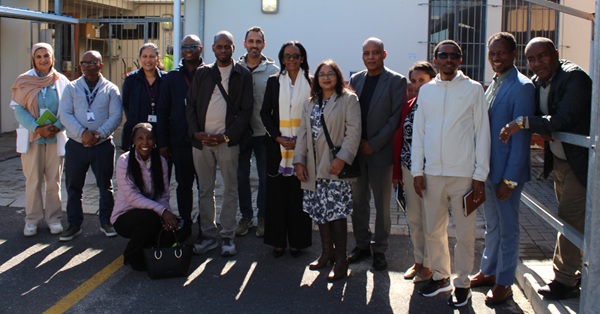
Last week, a delegation from Ethiopia travelled through high storms and into the layered realities of primary healthcare in Cape Town, from national policy discussions and research governance frameworks to the crowded corridors, consultation rooms and operational pressures of frontline care.
The Knowledge Translation Foundation had the privilege of hosting the delegation through a week-long benchmarking visit focused on one of the most urgent challenges facing modern healthcare systems: ensuring that evidence meaningfully shapes policy and frontline healthcare.
Ethiopia and knowledge translation
The visit formed part of Ethiopia’s broader effort to strengthen institutional capacity for evidence-informed policymaking through its Policy, Strategy and Research Lead Executive Office (PSR-LEO) and the National Health Policy, Strategy and Research Advisory Council.
As the country undertakes reforms aimed at improving knowledge translation systems, policy coordination, and research governance nationally, the delegation came to the Western Cape to study models that have successfully embedded evidence into health system decision-making and service delivery.
One such model is that of the Practical Approach to Care Kit (PACK), which was designed to strengthen healthcare systems so that quality care is available to people in under-resourced settings.
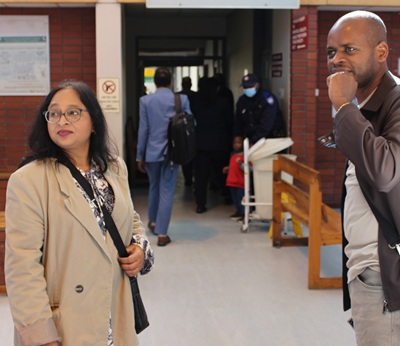
During the week-long trip, the delegation travelled to a primary healthcare clinic on the Cape Flats in Cape Town, South Africa, a key space where PACK is being implemented.
Patients moved steadily through waiting areas and nurses navigated consultations at speed while we moved through hallways lined with poster reminders of the overlapping pressures facing South African primary healthcare.
The facility serves a large and densely populated catchment area, shaped by poverty, informality, chronic disease and persistent social pressures.
Between 12-15 thousand patients move through the clinic each month, many arriving not only with acute illness, but with multiple conditions that require long-term management and continuity of care. And it is in these very spaces where tools like PACK truly shine, empowering clinicians to manage patients with confidence.
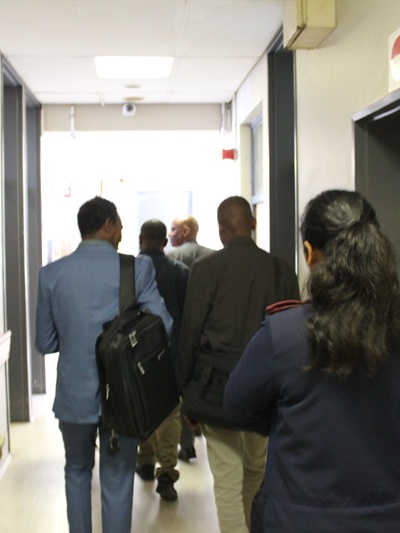
The delegation heard how decisions taken at one point in the patient journey inevitably reverberate elsewhere: in pharmacy queues, emergency units, referral pathways, staff workloads and waiting times.
The discussions frequently returned to the question that sits at the heart of knowledge translation itself: how does evidence become usable in environments defined by pressure, unpredictability and limited resources?
Indeed, evidence must be translated into practical, coherent, and responsive workflows that reflect real conditions on the ground. Clinical protocols need to support both accurate diagnosis and treatment, as well as the speed and consistency required in overstretched facilities where patient demand far exceeds capacity.
And it is tools like PACK that meet such a challenge, ensuring that healthcare is standardised and in keeping with best practice, despite the pressures that come with limited resources.
Throughout the tour, the delegation observed how such evidence-based guidance has become embedded into routine clinical practice, taking a lot of the load off clinicians in facilities that might seem overstretched and overburdened.
Implementing evidence-based guidance
Rather than treating conditions in isolation, PACK integrates guidance across multiple diseases and levels of care into a single clinical decision-support tool designed specifically for high-burden primary healthcare settings.
The intention is not merely to standardise care, but to improve the quality of care, bringing evidence to clinicians and making evidence more usable under pressure.
One staff member described how use of PACK can support quicker and more streamlined procedures and decision-making.
“We want that process to be quick and streamlined, and that’s where knowledge of the guideline comes in.
“We find that then the clinician spends more time partnering with the patient, educating the patient, and making the correct decisions moving forward,
Health systems as human systems
As the afternoon drew on, the formal presentations gave way to quieter conversations in corridors and consultation rooms.
Delegates asked questions about referral pathways, staff pressures, patient flow, electronic systems and quality improvement processes. Others paused to observe waiting rooms or speak with staff.
Primary healthcare, as several participants reflected throughout the visit, is a constantly evolving negotiation between evidence, resources, relationships and social realities.
Community engagement and outreach also emerged as an important thread throughout the visit.
By the time the delegation departed the clinic, the skies over Cape Town had finally cleared.
But the conversations begun during the week about evidence, implementation and the difficult work of translating policy into practice appeared likely to continue long after the storm had passed.
By Joey Latief, Communications Officer, Knowledge Translation Foundation
Published 20 May 2026


